
Julia Van Almsick
Sustainable Style Expert | Up-Cyclist
Webisode Season 1
Top Guests Webisodes
Subscribe and be part of the movement.
If you care about fashion with meaning, conscious living, and real voices making real impact, you’re in the right place.
Subscribe Newsletter
Receive updates, new episodes, behind-the-scenes content, and sustainability insights.
The Art of Up-cycling
Summary:
In this conversation, Julia, a personal stylist from Munich, discusses her approach to sustainable fashion, emphasizing the importance of utilizing what is already in one’s closet. She explains her process of working with clients to enhance their personal style while promoting sustainability through upcycling and education. The discussion covers the significance of closet awareness, the role of individual style in confidence, and the challenges posed by fast fashion on clothing quality. In this conversation, Julia, The Munich Stylist, and Tafreed Butt discuss the importance of sustainable fashion, the impact of materials and chemicals in clothing production, and the value of conscious consumerism. They emphasize the importance of consumers being aware of the origins and quality of their clothing and advocate a shift toward ethical fashion choices. The discussion also covers personal style development, wardrobe management, and the empowerment that comes from making informed fashion decisions.
Takeaways
- Sustainability in fashion starts with what you already own.
- Closet awareness is crucial for sustainable styling.
- Personal style should prioritize comfort and confidence.
- The process of styling involves understanding individual needs.
- Upcycling transforms old garments into new, unique pieces.
- Education about clothing quality is essential for consumers.
- A good fit is more important than following trends.
- Secondhand shopping can offer high-quality options.
- Recycling and upcycling serve different purposes in sustainability.
- The fashion industry faces challenges due to overconsumption and fast fashion.
- Wool offers benefits like breathability and warmth that plastic does not.
- Chemicals are used in fabric production and dyeing processes.
- Cheap clothing often comes with hidden health and environmental costs.
- Consumers should appreciate the craftsmanship behind clothing.
- Sustainable fashion means buying less but with more intention.
- Understanding the chemicals in clothing is crucial for health.
- Quality materials enhance comfort and confidence in apparel.
- Personal style should reflect individual preferences, not trends.
- Photographs can provide a more objective view of outfits than mirrors.
- The fashion industry has a significant impact on the environment.
Fashion With Purpose
A Journey with Julia
In a world where fast fashion dominates, Julia, The Munich Stylist, offers a refreshing perspective on sustainable fashion. Her approach is simple yet profound: work with what you have. Julia emphasizes the importance of creativity and sustainability, encouraging us to delve into our closets and rediscover the potential of our existing wardrobe.
Julia’s philosophy is rooted in the belief that the most sustainable clothes are the ones we already own. She guides her clients to explore their personal style by reimagining and upcycling their current pieces. This not only reduces waste but also fosters a deeper connection with our clothing. Julia’s expertise in tailoring and her passion for quality craftsmanship shine through as she transforms outdated garments into unique, stylish pieces.
Beyond individual consultations, Julia is a vocal advocate for sustainable fashion, educating larger audiences through seminars and workshops. Her message is clear: by making conscious choices and valuing quality over quantity, we can all contribute to a more sustainable future.
As we navigate our own style journeys, Julia reminds us to prioritize what makes us feel confident and comfortable. In a world obsessed with trends, she encourages us to embrace our individuality and wear our clothes with pride.
Subscribe now to explore more about sustainable fashion and personal style with Julia, The Munich Stylist.
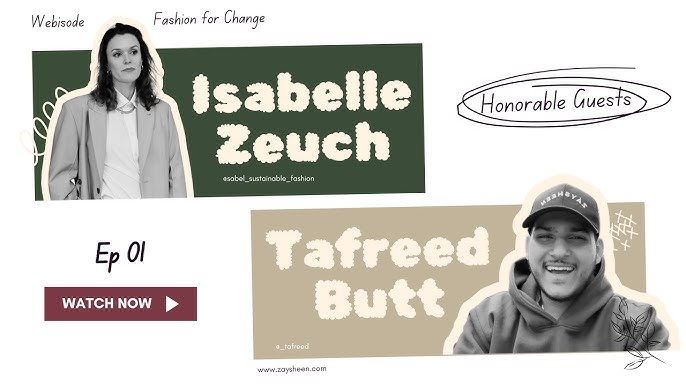
For both Izzy and Tafreed, sustainability is not only about fabric, water usage, or recycling. It is also about the people who make our clothes. Many garment workers in countries like Bangladesh, Pakistan, and Nepal earn far below a living wage. They often work long hours in unsafe environments to produce inexpensive clothing that sells in the West.
Tafreed’s own background in Thailand gave him firsthand experience with this reality. He met workers who did not receive fair wages and saw clothes produced with little regard for quality or ethics. It was this environment that pushed him to say no to fast fashion and to start building something better.
The episode highlights a powerful message. Change begins with awareness. It grows through conversation. And it becomes real when brands and consumers choose ethical production, fair wages, and quality materials.
Fashion lasts longer when it is made with intention. The world becomes cleaner when we buy less and use what we already have. And the industry becomes fairer when we think about the hands behind every stitch.
Fashion for Change is not just a podcast. It is a reminder that style can be beautiful without harming people or the planet. With voices like Izzy and Tafreed, the movement continues to grow, inspiring listeners to choose better, live consciously, and support fashion that values humanity.