
Jenna Flood
Slow Fashion Advocate | Speaker
Webisode 5
Top Guests Webisodes
Subscribe and be part of the movement.
If you care about fashion with meaning, conscious living, and real voices making real impact, you’re in the right place.
Subscribe Newsletter
Receive updates, new episodes, behind-the-scenes content, and sustainability insights.
The Power of Mindful Fashion
Summary:
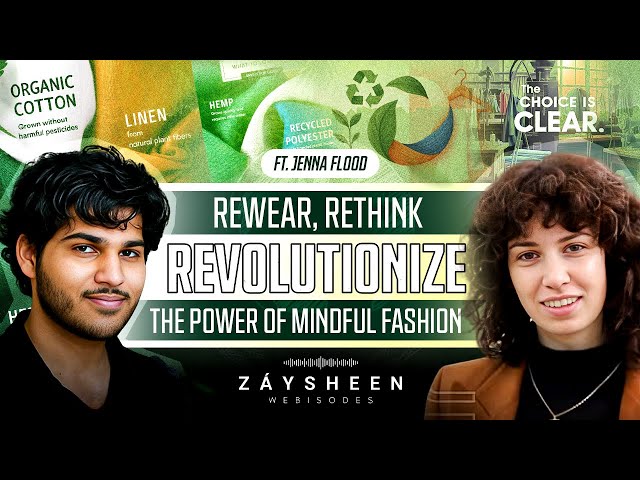
In this ZÁY SHEEN Webisodes episode, Tafreed sits down with Melbourne-based slow fashion advocate and content creator Jenna Flood to explore how minimalism, secondhand style, and conscious choices can reshape our relationship with clothes. Jenna shares how a minimalist documentary in 2016 sparked her shift away from fast-fashion retail toward slow fashion, veganism, and living with less, eventually leading her to study styling and work in consignment and clothing-swap spaces. She breaks down how the secondhand ecosystem really works behind the scenes, from consignment stores and op shops to clothing swaps and textile recycling, and gently challenges the myth that donating everything is automatically sustainable. Throughout the conversation, Jenna highlights the problems of greenwashing, overconsumption, and modern slavery in the fashion industry. She explains why minimalism is not about deprivation but about clarity, calm, and using what you already have. Her core advice is simple but powerful: pause before buying, ask whether you truly need the item, research where it comes from and where it will go when you are done, and choose secondhand, mending, and sharing whenever possible. The episode closes with a hopeful look at the future of fashion, from innovative materials to community-driven solutions, and a reminder that each of us can “rewear, rethink, and revolutionize” through the everyday choices we make.
How Mindful Fashion Starts In Your Own Wardrobe
What if the most sustainable outfit you own is already hanging in your closet?
In a recent episode of ZÁY SHEEN Webisodes, I sat down with Melbourne-based slow fashion advocate and content creator, Jenna Flood, to talk about secondhand style, minimalism, and how small changes in our habits can reshape the future of fashion.
Jenna’s journey started around 2016 after watching a documentary on minimalism. That one film made her look around her home and see “stuff” everywhere. Clothes she did not love, things she did not use, and a constant feeling that she needed more in order to feel enough. From there, she fell into the world of slow fashion, secondhand shopping, zero-waste living, and a more conscious lifestyle.
Over time, Jenna studied styling, worked in fashion retail, and then stepped into the secondhand world through consignment and clothing swap events. She now spends her time educating people on how to dress in a way that feels good, looks good, and does less harm.
One of the most potent parts of our conversation was her breakdown of what really happens to our clothes.
Many people believe that dropping a bag in a donation bin or at a thrift store automatically equals “recycling.” In reality, stained or damaged pieces often go straight to the landfill. Shops are businesses. They usually do not have the time or budget to repair every missing button or big tear.
Jenna suggests a simple way to think about it before you let go of anything:
- If it is totally worn out, turn it into cleaning rags or look for textile recycling in your area.
- If it is still in good condition, donate it to a trusted charity shop, consign it, or swap it with friends.
- If it is special but no longer your style, upcycle it or pass it to someone who will truly wear it.
We also talked about the myth that secondhand is “gross.” The truth is, many people handle brand-new clothes and travel through long supply chains before they reach the rack. Secondhand is not a downgrade. It is often where you find better-quality, unique pieces and a powerful story of reuse.
So, how do you start practicing mindful fashion in real life?
Jenna shared two simple rules:
-
Pause before you buy.
Ask yourself, do I really need this, or am I just chasing a feeling? Only buy what you know you will wear often. -
Think about the item's full life cycle.
Where did it come from? Who made it? What will you do with it when you are done?
If you can answer those questions honestly and with care, you are already moving toward slow fashion.
At ZÁY SHEEN, I often say, “Everything you need is already in your wardrobe.” If you truly need something new, choose pieces from sustainable, ethical brands, or shop secondhand first. Your money is your vote. Every purchase either supports fast fashion or fuels a better system that respects both people and the planet.
Rewear what you own. Rethink what you buy. That is how we quietly revolutionize fashion, one outfit at a time.