
Amanda Grogor-Rushforth
Sustainable fashion | TEDx Speaker | Ocean Advocate
Webisode 4
Top Guests Webisodes
Subscribe and be part of the movement.
If you care about fashion with meaning, conscious living, and real voices making real impact, you’re in the right place.
Subscribe Newsletter
Receive updates, new episodes, behind-the-scenes content, and sustainability insights.
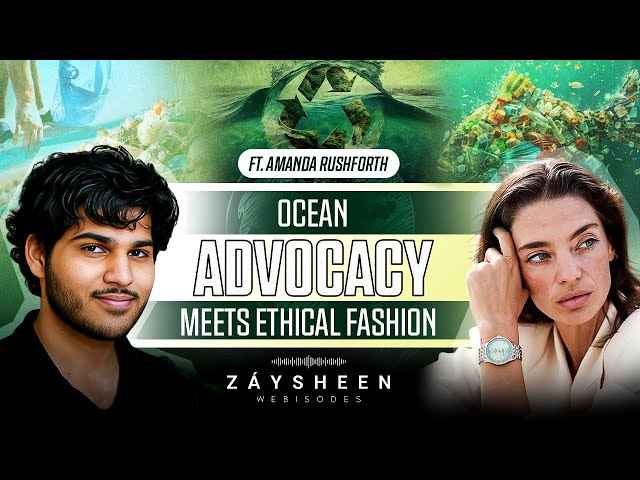
Ocean Advocacy Meets Ethical Fashion
Summary:
In this episode of ZÁY SHEEN Webisodes, Tafreed speaks with ocean advocate and sustainable fashion champion Amanda Rushforth about how our clothing choices connect directly to marine health. Amanda shares how growing up by the sea in Saudi Arabia led her to lifelong beach cleanups and eventually to her work with Azraq, a UAE-based marine conservation NGO that tackles issues like microplastics, coral restoration, mangrove planting, and corporate ESG engagement. She explains the hidden impact of synthetic fibers such as polyester and nylon, how washing our clothes sheds microplastics into the ocean, and what real solutions look like, from choosing natural fibers and secondhand fashion to supporting brands that are transparent about their supply chain, pay, and production volume. Together, they unpack greenwashing, the dangers of overproduction and returns, and why renting, swapping, and buying less are powerful tools. Amanda emphasizes that consumers “vote with their money” every time they shop, while Tafreed shares how ZÁY SHEEN evolved into an ethical, biodegradable, tree-planting brand rooted in fairness for both people and planet. The conversation ends with a call to action to educate ourselves, support truly sustainable brands, and turn awareness into local community impact.
A Conversation With Amanda Rushforth
What if the clothes in your wardrobe were quietly affecting the health of our oceans?
In a recent episode of ZÁY SHEEN Webisodes, Tafreed sat down with Amanda Rushforth – ocean advocate, TEDx speaker, and board member of Azraq, a marine conservation society based in the UAE- to discuss how plastic, fashion, and personal choices collide at the shoreline.
This blog walks through that conversation and turns it into practical steps you can use in your own life.
Growing Up With the Ocean
Amanda’s story starts on the coast of Jeddah, Saudi Arabia, where she grew up by the Red Sea. As a child, she spent weekends on raw, undeveloped beaches. The water was beautiful, the coastline wild, but there was one constant detail:
Even at seven or eight years old, she remembers asking:
- Where is all this rubbish coming from?
- Why is it in the ocean?
- What can we do about it?
Beach cleanups became a regular part of family life. Years later, when she moved to Dubai, another coastal city, the problem had not disappeared. It had simply changed form.
Instead of mostly big bottles and visible trash, the coastline began to show a more silent threat:
Microplastics.
Those tiny pieces are now everywhere, from beaches to the deepest parts of the ocean.
From Coastlines To Conservation: Azraq
Amanda now serves on the board of Azraq, a marine conservation NGO in the UAE that focuses on the entire marine ecosystem, not just what we see on the sand.
Azraq works across several pillars:
- Mangroves
- Native to the region
- Help sequester carbon
- Protect coastlines and support biodiversity
- Coral Nurseries
- Focused on cooler coastal areas in the UAE where coral can survive
- Support coral reproduction and reef health
- Ghost Net Diving and Ocean Cleanups
- Removing abandoned fishing nets and marine debris
- Microplastics and Fashion
- Educating people about how synthetic clothing fibers are polluting the ocean
Azraq is government-approved, which means they can accept CSR funding and partner with corporations who want to meet ESG goals by planting mangroves, supporting coral restoration, and investing in real, local impact.
The Hidden Link Between Fashion and Ocean Health
Most people know about plastic bottles and bags in the ocean. Far fewer realize that their leggings, fleeces, and fast fashion tops are also part of the problem.
Amanda breaks it down very clearly:
- Materials like polyester, acrylic, nylon, rayon, and other synthetics are basically plastic.
- Every time we wash them, the machine releases microplastics into the grey water.
- That water eventually reaches rivers and oceans, carrying millions of tiny plastic fibers.
Even if we recycle bottles and avoid plastic straws, our laundry alone can continue feeding plastic into the marine ecosystem.
On top of that, the fashion industry has:
- A huge carbon footprint
- Massive water usage
- Heavy chemical dye pollution
- Ethical issues in labor and wages
Denim is one powerful example. Jeans start as white cotton. To achieve that classic blue shade, they undergo multiple dye baths, acid washes, and chemical treatments. If the factory is not using a closed-loop water system, those chemicals end up downstream, poisoning communities and ecosystems.
Plastic Is Not Just Evil – It Is About Purpose
Amanda is very clear: plastic is not the enemy by itself. It is about how and where we use it.
Plastic can be genuinely useful when:
- You need waterproof gear
- You need high stretch or technical performance
- You are in extreme weather conditions
The problem is not that plastic exists. The problem is that we use it for things that could easily be made from natural fibers, and then we dispose of it carelessly on a large scale.
Slow Fashion, Secondhand First
So how does Amanda personally balance style, quality, and sustainability?
Two simple rules guide her wardrobe:
- One in, one out
- If something new comes in, something must go out.
- She donates, resells, or passes on items that still have life.
- This keeps her from accumulating clothes she does not actually need.
- Shop secondhand first
- She looks for items in the resale or vintage market before buying anything new.
- Buying secondhand significantly reduces an item’s carbon footprint.
- For luxury pieces, she prefers resale platforms so she can resell them later, almost like renting them over time.
She also pays attention to materials:
- Prefers natural fibers like cotton, linen, hemp, flax, bamboo
- Avoids synthetics where possible, except in very specific technical situations
- Reads labels and questions the blend when something claims to be “recycled.”
Greenwashing: How To Spot It
Greenwashing is everywhere in fashion. Amanda describes it as:
When brands look green without changing what really matters.
Some red flags:
- Vague slogans like “eco collection” with no clear proof
- Heavy use of green visuals, leaves, nature imagery, but no substance
-
Percentages with no context
“Made with 30 percent recycled materials,” without saying which part
No transparency about:
- Where fabric is sourced
- Who made the clothes
- How much is produced
She suggests you:
-
Know your fibers
Natural vs synthetic -
Read the label
Is it fully natural, a blend, or mostly plastic? -
Look for specificity
Country of production, certifications, and small batch production -
Ask questions
Truly sustainable or slow brands are usually happy to answer
If a brand avoids clear answers, that is a sign in itself
And a key truth that often gets missed:
- Recycled synthetic fabric often cannot be recycled again.
So a “recycled polyester” item may still end up in a landfill at the end of its life.
The Power Of Renting, Swapping, And Buying Less
Throughout the conversation, one big message comes back again and again:
We already have enough clothes.
There are enough garments on this planet to dress several future generations, yet production keeps increasing.
Some better options:
-
Clothing rental
Perfect for events, weddings, or outfits you know you will only wear once or twice. -
Clothes swapping
Share with friends, family, or local swap events. You get a “new” outfit without buying anything new. -
Thrifting and resale platforms
Extend the life of existing garments instead of feeding demand for new ones. -
Shopping your own wardrobe first
Before you buy, open your closet and really look. Most of us already have what we need.
ZÁY SHEEN’s Perspective: Elegance With Ethics
In the episode, Tafreed also shares how ZÁY SHEEN evolved from a small clothing venture into a fully ethical and sustainable brand.
Key points he highlights:
- The brand shifted away from generic production to focus on:
- Ethical manufacturing
- Fair wages
- Natural and eco-conscious materials
- ZÁY SHEEN uses biodegradable and recycled packaging, including:
- Recycled mailer bags
- Recycled paper branding materials
- Fabric packaging that can be reused
- The mission is simple and honest:
- Do not buy from us if you do not need something
- If you truly need clothing, choose brands that respect people and planet
ZÁY SHEEN is also involved in tree planting in partnership with NYC Parks, aiming to plant thousands of trees to support urban green spaces and improve air quality for local communities.
How You Can Influence The Future Of Fashion
Amanda says it in one simple, powerful line:
You vote with your money.
Every purchase is a vote for the kind of industry you want to exist.
Here is how you can start today:
- Pause before you buy
- Ask: Do I really need this, or is it just a want?
- Can I rent, borrow, or swap instead?
- Choose natural fibers when you can
- Cotton, linen, hemp, bamboo, wool, flax
- Shop secondhand first
- Vintage shops, resale apps, local thrift stores
- Support small or slow fashion brands.
- Look for transparency
- Check if they share their suppliers, wages, and production process.
- Wash smarter
- Wash less often
- Use colder water
- Consider a microplastic filter for your machine if you wear synthetics
- Share what you learn.
- Talk to friends and family
- Share podcasts, documentaries, and posts that opened your eyes
How You Can Influence The Future Of Fashion
Ocean advocacy and ethical fashion are not two separate worlds. They are deeply connected.
The polyester top you buy, the jeans you wash, the clothes you throw away all show up somewhere, often in someone else’s river, community, or coastline.
Through voices like Amanda Rushforth and platforms like ZÁY SHEEN Webisodes, we are reminded that sustainability is not just a trend. It is a responsibility and an opportunity.
Every choice you make is a quiet ripple. Enough ripples become a wave.
Ready to dive deeper?
Watch the full episode “Ocean Advocacy Meets Ethical Fashion: A Conversation with Amanda Rushforth” on YouTube and keep this conversation going in your own life.