
Linna Sutha
BSC Ecology | Biodiversity | Climate
Webisode Season 1
Top Guests Webisodes
Subscribe and be part of the movement.
If you care about fashion with meaning, conscious living, and real voices making real impact, you’re in the right place.
Subscribe Newsletter
Receive updates, new episodes, behind-the-scenes content, and sustainability insights.
Ecology to Advocacy
Summary:
In this Webisode, Tafreed sits down with Linna Sutha, a passionate Ecology & Biodiversity student from Malaysia and creator of @simplypasha.my. From her early days selling metal straws to her hands-on fieldwork in Malaysia’s rainforests, Linna shares heartfelt stories, funny moments, and deep insights about conservation, wildlife, sustainability, and the realities of environmental work. She breaks down topics such as aposematism, microplastics, humane solutions for stray animals, and the impact of generative AI, while also connecting nature to personal style, mindful consumption, and sustainable fashion. With warmth, humor, and clarity, Linna shows that anyone can make a difference by learning, speaking up, and starting small. This episode blends science, storytelling, and purpose into one inspiring conversation.
Fashion With Purpose
From Metal Straws to Malaysian Rainforests: A Deep Dive Into Sustainability with Linna Sutha
In one of the most eye-opening episodes of ZÁY SHEEN Webisodes, host Tafreed sits down with Linna Sutha, a third-year Ecology & Biodiversity student from Malaysia and the creator behind @simplypasha.my. What unfolds is a conversation filled with curiosity, humor, science, and truth, a refreshing reminder of how deeply connected we are to the world around us.
A Passion Sparked at Home
Linna’s love for nature didn’t come from textbooks; it began at home. Her mom, who always rescued insects rather than squashing them, planted the seeds of compassion and curiosity. Weekend visits to nature parks, butterfly gardens, and wildlife sanctuaries shaped her worldview long before she ever majored in ecology.
Today, she studies biodiversity hands-on, learning directly from Malaysia’s leading experts. Weekly field trips, forest research, and encounters with snakes, bats, and tropical wildlife have become part of her routine and part of her story.
The Metal Straw That Started It All
During the pandemic, Linna launched her first eco-friendly business: metal straws. While the project was small, the intention was big; she wanted to make an impact. This idea eventually transformed into Simply Pasha, her educational platform dedicated to sharing plant facts, wildlife stories, conservation insights, and environmental knowledge in a fun, accessible way.
Her goal is to educate, inspire, and make environmental awareness feel like something everyone can be part of.
When Fieldwork Meets Real Life
One of the most memorable moments Linna shares in the Webisode is hilariously humbling: she confidently picks up a “harmless blind snake” during a field trip, only for her professor to reveal it’s an entirely different species. For two days straight, her classmates didn’t let her forget it.
These moments remind us that science isn’t about perfection; it’s about learning, observing, and staying curious.
Advocating for Stray Animals
The conversation also takes a decisive turn toward animal welfare. Linna describes the heartbreaking reality of stray dog culling in Malaysia, and how she helped raise awareness, share petitions, and support legislation that eventually brought the practice to an end.
Her advocacy highlights a crucial truth: change begins when someone speaks up, even for the smallest creature.
Aposematism: When Nature Teaches Us About Identity
One of the most fascinating parts of the episode is Linna’s explanation of aposematism, the bright, bold colors animals use to warn predators. Poison dart frogs, monarch butterflies, and coral snakes all use color as communication, survival, and identity. Her insight is profound: “A tiger never tries to be a peacock. Every animal is unique. Why do humans put themselves in boxes?”
It’s a message that aligns beautifully with ZÁY SHEEN’s mission: embrace your own style, your own colors, your own identity, sustainably.
The Hidden Cost of Convenience and Generative AI
Linna also raises concerns about the rapid growth of AI technology:
- AI data centers consume massive amounts of water.
- Overdependence weakens creativity and critical thinking.
- Personal data and images raise ethical concerns.
- Convenience culture can disconnect us from real learning.
Her philosophy is simple:
Use AI as a tool, not a substitute for your mind.
How Everyone Can Help the Planet
Linna’s biggest message is that helping the environment doesn’t require expertise, just intention.
Here are her simplest tips:
- Don’t litter, ever.
- Support ethical, sustainable brands.
- Educate yourself and others.
- Volunteer at shelters or conservation centers.
- Choose quality over quantity.
- Re-wear your clothes proudly.
Small actions inspire bigger ones. Education spreads. Habits transform.
And that ripple effect?
It’s how change really begins.
The Heart of the Episode
This Webisode is more than an interview; it’s an exploration of the environment, personal identity, fashion, human behavior, and the future of sustainability. Through laughter, storytelling, deep questions, and honest conversations, Tafreed and Linna highlight a powerful truth:
You don’t need to be an expert to make a difference. You need to start.
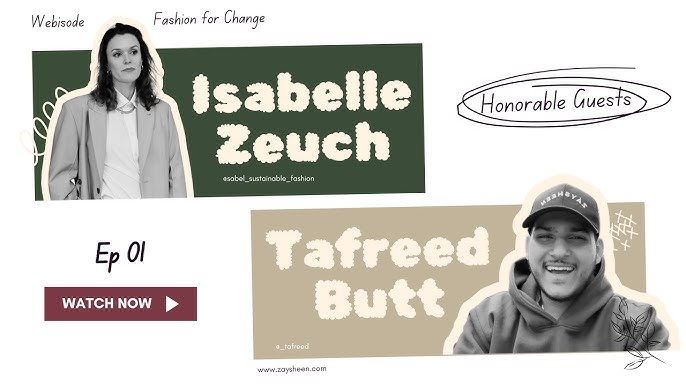
For both Izzy and Tafreed, sustainability is not only about fabric, water usage, or recycling. It is also about the people who make our clothes. Many garment workers in countries like Bangladesh, Pakistan, and Nepal earn far below a living wage. They often work long hours in unsafe environments to produce inexpensive clothing that sells in the West.
Tafreed’s own background in Thailand gave him firsthand experience with this reality. He met workers who did not receive fair wages and saw clothes produced with little regard for quality or ethics. It was this environment that pushed him to say no to fast fashion and to start building something better.
The episode highlights a powerful message. Change begins with awareness. It grows through conversation. And it becomes real when brands and consumers choose ethical production, fair wages, and quality materials.
Fashion lasts longer when it is made with intention. The world becomes cleaner when we buy less and use what we already have. And the industry becomes fairer when we think about the hands behind every stitch.
Fashion for Change is not just a podcast. It is a reminder that style can be beautiful without harming people or the planet. With voices like Izzy and Tafreed, the movement continues to grow, inspiring listeners to choose better, live consciously, and support fashion that values humanity.