
Samuel Kumi-Gyau
Founder | Climate Advocate | Sustainability
Webisode Season 1
Top Guests Webisodes
Subscribe and be part of the movement.
If you care about fashion with meaning, conscious living, and real voices making real impact, you’re in the right place.
Subscribe Newsletter
Receive updates, new episodes, behind-the-scenes content, and sustainability insights.
The Ghanaian Path to Sustainable Fashion
Summary:
In this episode of ZÁY SHEEN Webisodes, Tafreed sits down with Ghanaian climate advocate and entrepreneur Samuel Kumi, founder and creative lead of Gold Coast Takoda, a footwear brand turning waste into purpose. Samuel shares how a devastating 2020 flood in Accra, caused by textile waste clogging gutters, inspired him to build a brand that upcycles used jeans and car tires into handcrafted African-inspired footwear. Through its Happy Feet initiative, Gold Coast Takoda not only creates durable, meaningful shoes but also transforms lives by training and employing marginalized youth, single mothers, and people with disabilities, providing them with dignified income and valuable skills. Samuel explains how the brand partners directly with sources like auto companies and universities to collect waste materials, uses modern machinery and solar energy to reduce its carbon footprint, and collaborates with EV bike delivery services to keep operations as sustainable as possible. He also highlights the unique role African brands can play in global sustainable fashion, blending cultural heritage with innovation while proving that impact starts with purpose, not scale.
Fashion With Purpose
The Ghanaian Path to Sustainable Fashion
In a world where fast fashion floods landfills and coastlines, stories like Gold Coast Tokota feel like a deep breath of hope. In our latest ZÁY SHEEN Webisodes episode, I sit down with Ghanaian climate advocate and entrepreneur Samuel Kumi, the founder and creative lead behind Gold Coast Tokota. This brand turns discarded jeans and car tires into potent symbols of movement, dignity, and purpose.
Samuel shares how a devastating flood in Accra, caused in part by textile waste clogging gutters, became his turning point. Instead of accepting this as usual, he decided to transform the problem into a possibility. Today, Gold Coast Takoda has upcycled tons of textile waste into handcrafted African-inspired footwear, proving that sustainability is not a trend – it is a responsibility.
But the impact does not stop at products. Through their Happy Feet initiative, Samuel and his team train and employ marginalized youth, single mothers, and people with disabilities, offering not just a paycheck, but skills, pride, and a path forward. Every pair of shoes carries a story of someone who now walks closer to opportunity.
If you care about fashion that respects both people and planet, this conversation is for you.
Watch the full episode on YouTube, share it with a friend, and take one simple step today to make your wardrobe part of the solution, not the problem.
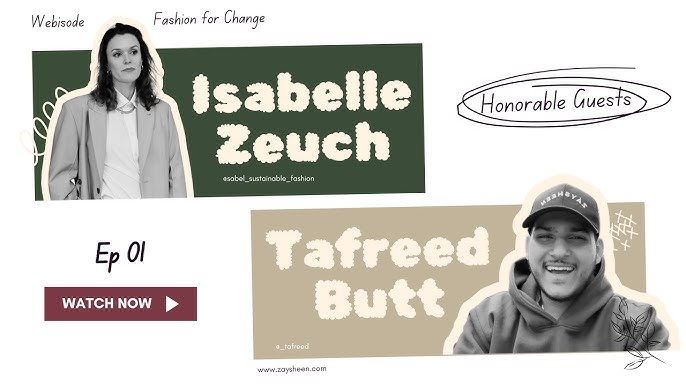
For both Izzy and Tafreed, sustainability is not only about fabric, water usage, or recycling. It is also about the people who make our clothes. Many garment workers in countries like Bangladesh, Pakistan, and Nepal earn far below a living wage. They often work long hours in unsafe environments to produce inexpensive clothing that sells in the West.
Tafreed’s own background in Thailand gave him firsthand experience with this reality. He met workers who did not receive fair wages and saw clothes produced with little regard for quality or ethics. It was this environment that pushed him to say no to fast fashion and to start building something better.
The episode highlights a powerful message. Change begins with awareness. It grows through conversation. And it becomes real when brands and consumers choose ethical production, fair wages, and quality materials.
Fashion lasts longer when it is made with intention. The world becomes cleaner when we buy less and use what we already have. And the industry becomes fairer when we think about the hands behind every stitch.
Fashion for Change is not just a podcast. It is a reminder that style can be beautiful without harming people or the planet. With voices like Izzy and Tafreed, the movement continues to grow, inspiring listeners to choose better, live consciously, and support fashion that values humanity.